Finding Connection at Fuji Rock: REI at the NGO Village
August 31, 2026
Jamie reflects on the FRF experience
When the gates opened at Fuji Rock Festival, there was an energy that was impossible to miss. People arrived excited for the music, the mountains, the camping, and everything that makes Fuji Rock such a unique experience. But throughout the festival grounds, there was another kind of energy too: people who were passionate about the causes, projects, and communities represented around them.
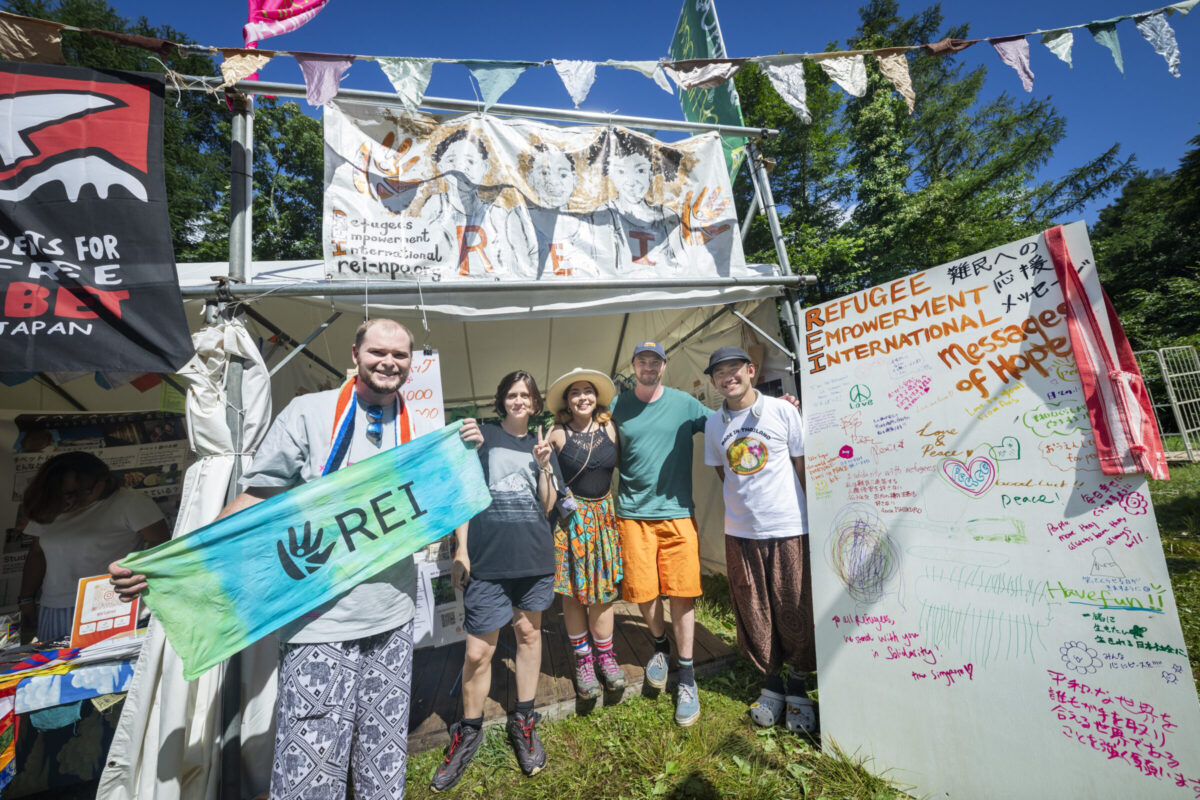
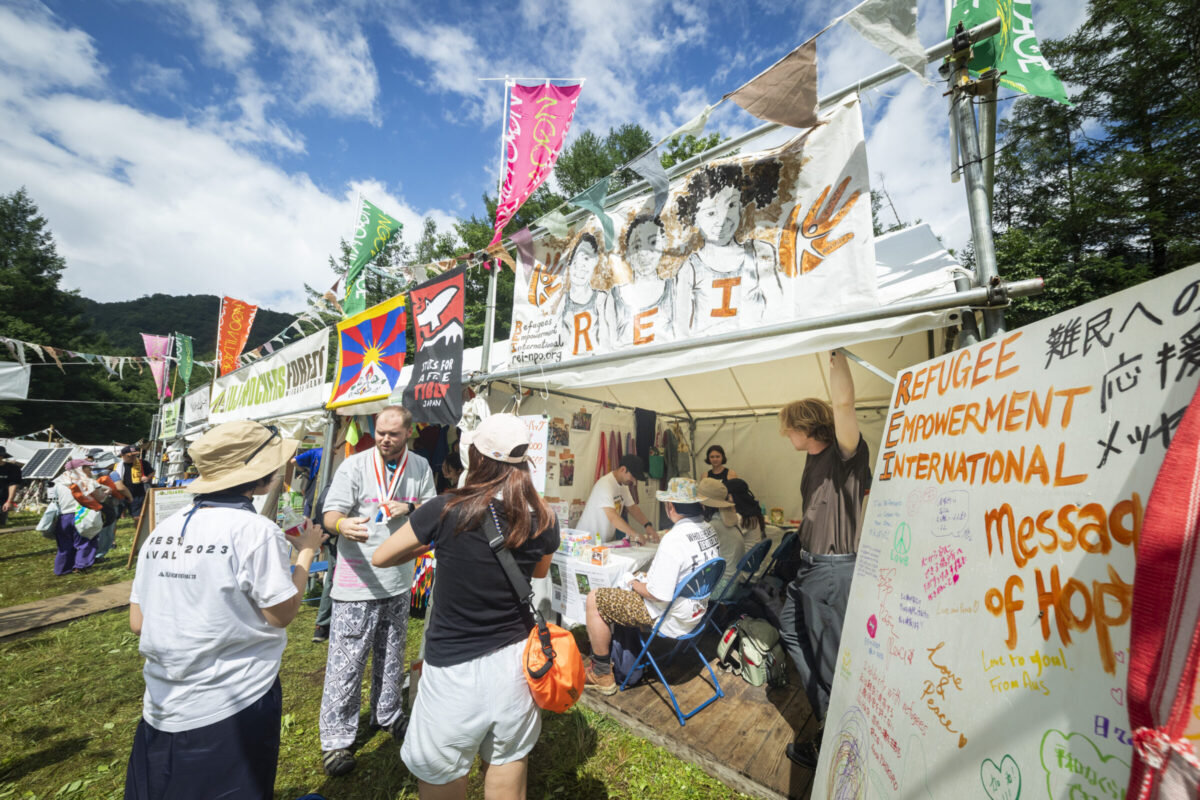
This year, I had the opportunity to help organize and host Refugee Empowerment International (REI)’s booth in the NGO Village alongside my teammates. For three days, we invited festivalgoers to learn about refugee issues, discover REI’s work, participate in activities, and, hopefully, leave with a little more understanding of the experiences of people whose lives may look very different from their own.
One of the things I enjoyed most about Fuji Rock was that conversations could begin in the simplest ways.
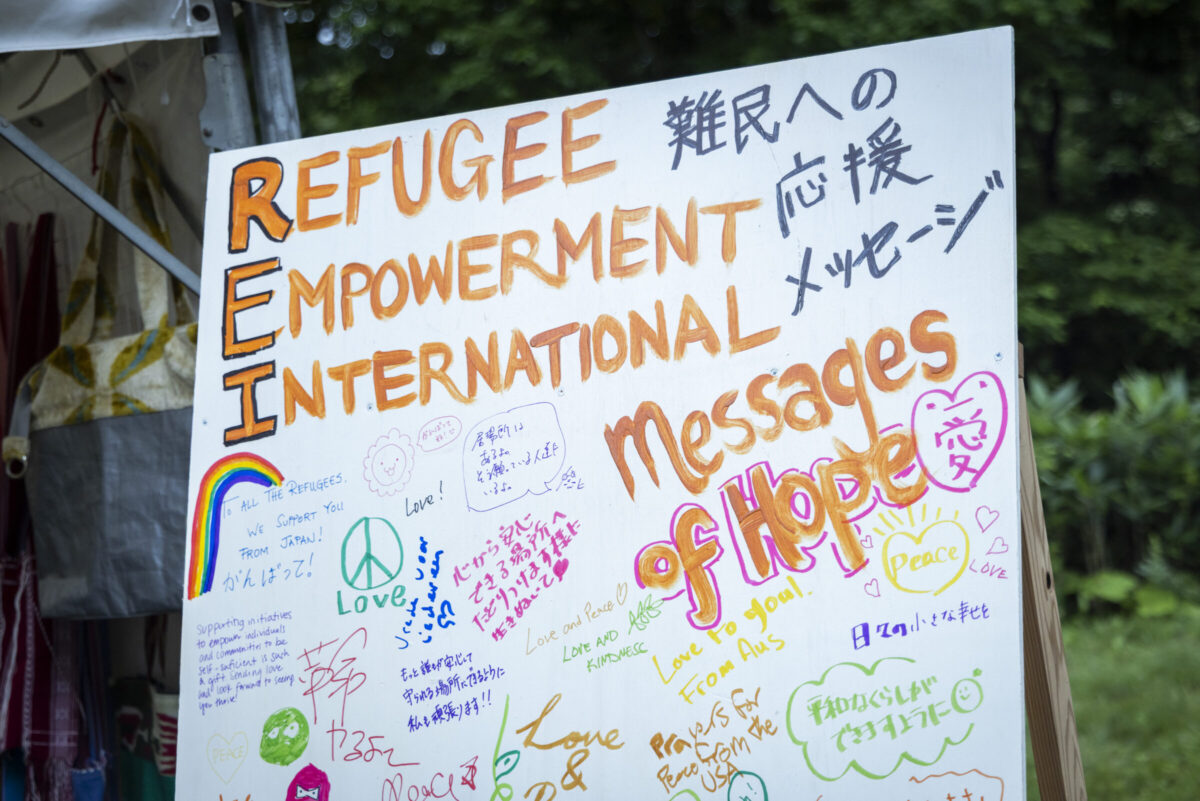
At our booth, visitors could write messages of encouragement and solidarity on our Message of Hope wall. By the end of the weekend, the wall was almost completely covered. Others joined us to create their own tie-dyed tenugui, while some stopped to look at the handcrafted bags made by Karen refugee artisans. These activities gave people an easy reason to stop by, but they often became the starting point for something more meaningful: a conversation.
That was one of the most rewarding parts of the weekend for me.
I remember speaking with one visitor who wasn’t familiar with who refugees are or what it means to be displaced. Rather than simply giving them a definition, we talked about the people behind the issue. We shared stories about REI’s maternal health program and the women and families it supports. As we talked, something seemed to click.
The conversation went from an unfamiliar concept to something human and understandable.
That moment reminded me why organizations like REI are important. Refugee issues can sometimes feel distant or difficult to understand, especially when we encounter them through statistics, headlines, or political discussions. But when we have the opportunity to hear about someone’s actual experiences, those barriers can begin to disappear.
Of course, explaining refugee issues to people who are encountering them for the first time isn’t always easy. There are complicated histories, different circumstances, and many misconceptions to navigate. But Fuji Rock provided an unusually welcoming environment for these conversations. Many of the people attending the festival are already interested in social issues and looking for ways to engage with the world around them. That made it exciting to share REI’s work and the opportunities available for people who want to contribute.
nd sometimes, the festival itself helped create the opportunity.
At one point, rain moved through the festival grounds.
Rather than seeing it only as an inconvenience, we found a way to make it work in our favor. People came into the booth to wait out the storm, giving us something that can be difficult to find at a busy festival: time. Instead of a quick conversation as someone passed by, we could sit together, talk, answer questions, and share more about REI. The rain slowed everything down for a little while, and in doing so, it created space for connection.
Across the weekend, approximately 70 people participated in our paid activities, while hundreds more stopped by the booth, looked around, asked questions, or simply took the time to talk with us.
Fuji Rock brought together people from different generations, backgrounds, and countries in one place.
At the REI booth, we were able to meet people we might never have encountered in our everyday lives. Some knew a great deal about refugee issues. Others knew very little. Some came specifically because they were interested in NGOs and social issues, while others were simply curious about a tie-dye activity or looking for somewhere to shelter from the rain.
Yet once we started talking, those differences often felt much smaller.
The experience reminded me that even when the political and social environment around us can feel tense or divided, there are still so many people who want to do good. There are people who are willing to listen, learn, and show compassion toward others whose circumstances are completely different from their own. Sometimes, what we need is simply an opportunity to connect.
That is what I think made the NGO Village so meaningful at Fuji Rock.
It created a space where people could step outside their normal routines and have conversations they might not otherwise have.
A person could arrive at our booth knowing nothing about refugees and leave having learned about the experiences of a woman receiving maternal healthcare.
Someone could come to make a tenugui and leave with a new understanding of why REI’s work matters.
Someone could simply stop in to escape the rain and end up having a conversation that changed the way they thought about an issue.
We may have more in common with one another than we realize. The weekend at Fuji Rock reminded me that breaking down barriers doesn’t always require a grand gesture. Sometimes it starts with a message written on a wall, a conversation while waiting for the rain to stop, or a story shared between two people who otherwise might never have met.
That is what I will take away from Fuji Rock: the importance of creating opportunities for people to connect, listen, and understand one another.